

BISJHINTUS JOBS
 SHRUTI PATEL
 Aug 19, 2025
 31 mins to read
Company Reviews Decoded: What to Look for Before Accepting an Offer
SHRUTI PATEL
Aug 19, 2025
31 mins to read
Discover how to decode company reviews in 2025 before accepting a job offer. Learn to spot red and green flags, read between the lines, and make smarter career decisions.

Table of Contents
- Introduction
- Why Company Reviews Matter in 2025
- How to Read Between the Lines of Company Reviews
- Spotting Red Flags and Green Flags in Employer Feedback
- Using Company Reviews to Make Smarter Career Decisions
- Conclusion
- FAQs
1. Introduction
The process of landing a new job doesn’t end with clearing interviews or receiving an offer letter. In 2025, professionals have become more discerning than ever about where they work. Beyond salary packages, job titles, and perks, candidates want to know if a company will truly value their contribution, support their growth, and respect their work-life balance. This is why company reviews — written by current and former employees — play such a significant role in the modern hiring journey.
With the rise of employer review platforms, social media discussions, and even AI-driven review aggregators, job seekers can access unprecedented insights into the reality of working at any organization. But while company reviews can be incredibly useful, they also come with challenges: biased opinions, disgruntled voices, and even exaggerated positivity. The key is knowing how to decode reviews intelligently.
This blog will take you through the importance of company reviews, how to analyze them critically, ways to identify warning signs and positive indicators, and finally, how to apply these insights to make better career decisions. By the end, you’ll be equipped to avoid pitfalls and choose organizations that align with your values and goals.
2. Why Company Reviews Matter in 2025

The job market in 2025 is more dynamic than ever. With hybrid work becoming standard, companies are not just competing on pay but also on culture, flexibility, diversity, and employee well-being. Job seekers no longer want to blindly accept offers; they want proof of what it’s like to work inside the organization.
Company reviews offer a window into aspects that may not show up in an interview: management style, team collaboration, career growth opportunities, internal politics, and even the day-to-day workload. For example, a company might boast of “work-life balance” in its recruitment campaign but employee reviews may reveal regular late nights and weekend expectations.
Surveys also reveal that more than 80% of job seekers in India and globally read company reviews before applying to or accepting a job. In fact, many top talents now prioritize organizational culture and leadership ratings over salary when choosing between multiple offers. Reviews empower candidates to make more informed choices and avoid toxic workplaces.
However, it’s equally important to remember that reviews reflect individual experiences. One person’s bad manager doesn’t necessarily mean the whole company is poorly run. The goal is to look for patterns, not isolated complaints.
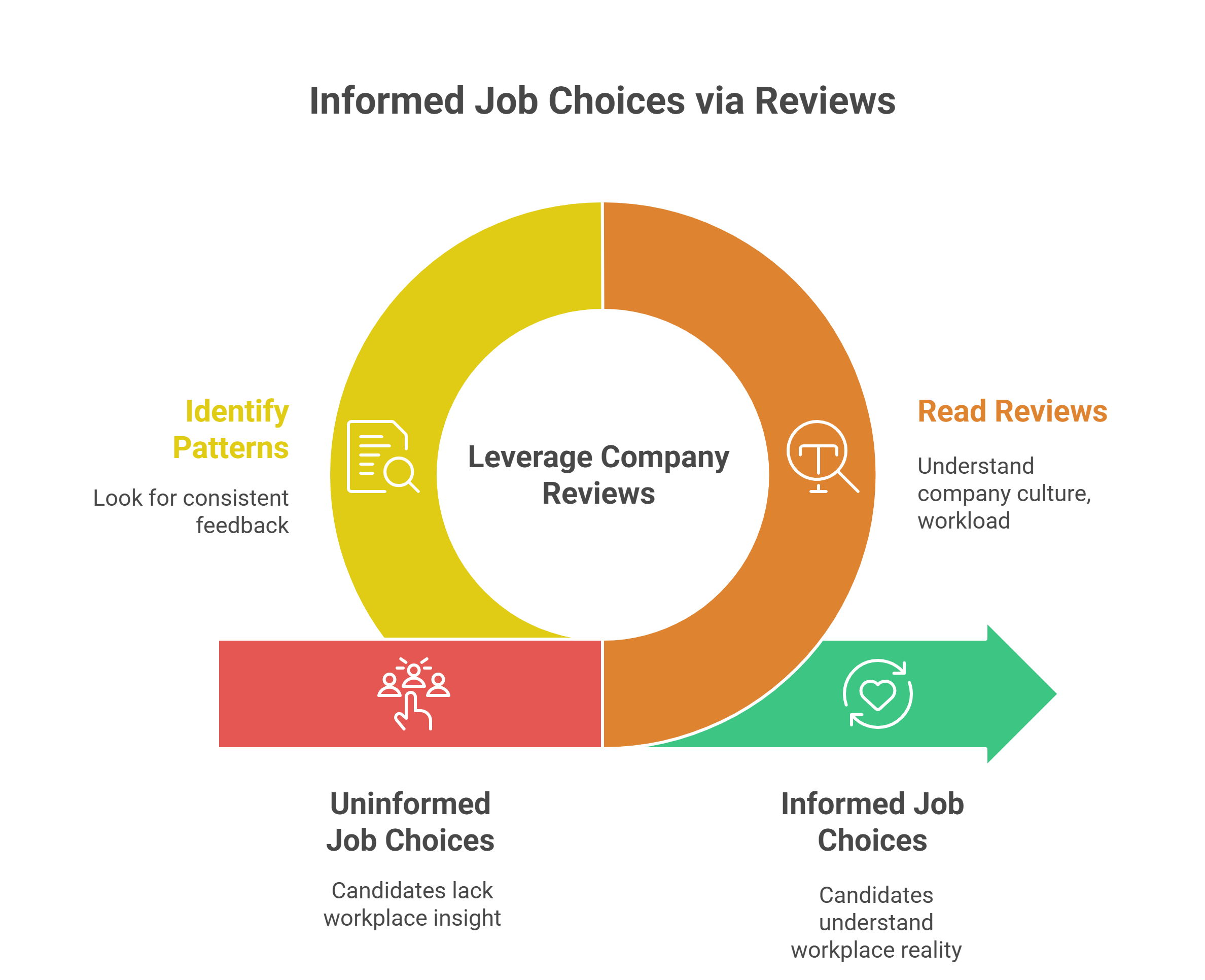
3. How to Read Between the Lines of Company Reviews

Company reviews should not be taken at face value. Instead, they should be approached critically, with attention to context and consistency. Here are some ways to read between the lines:
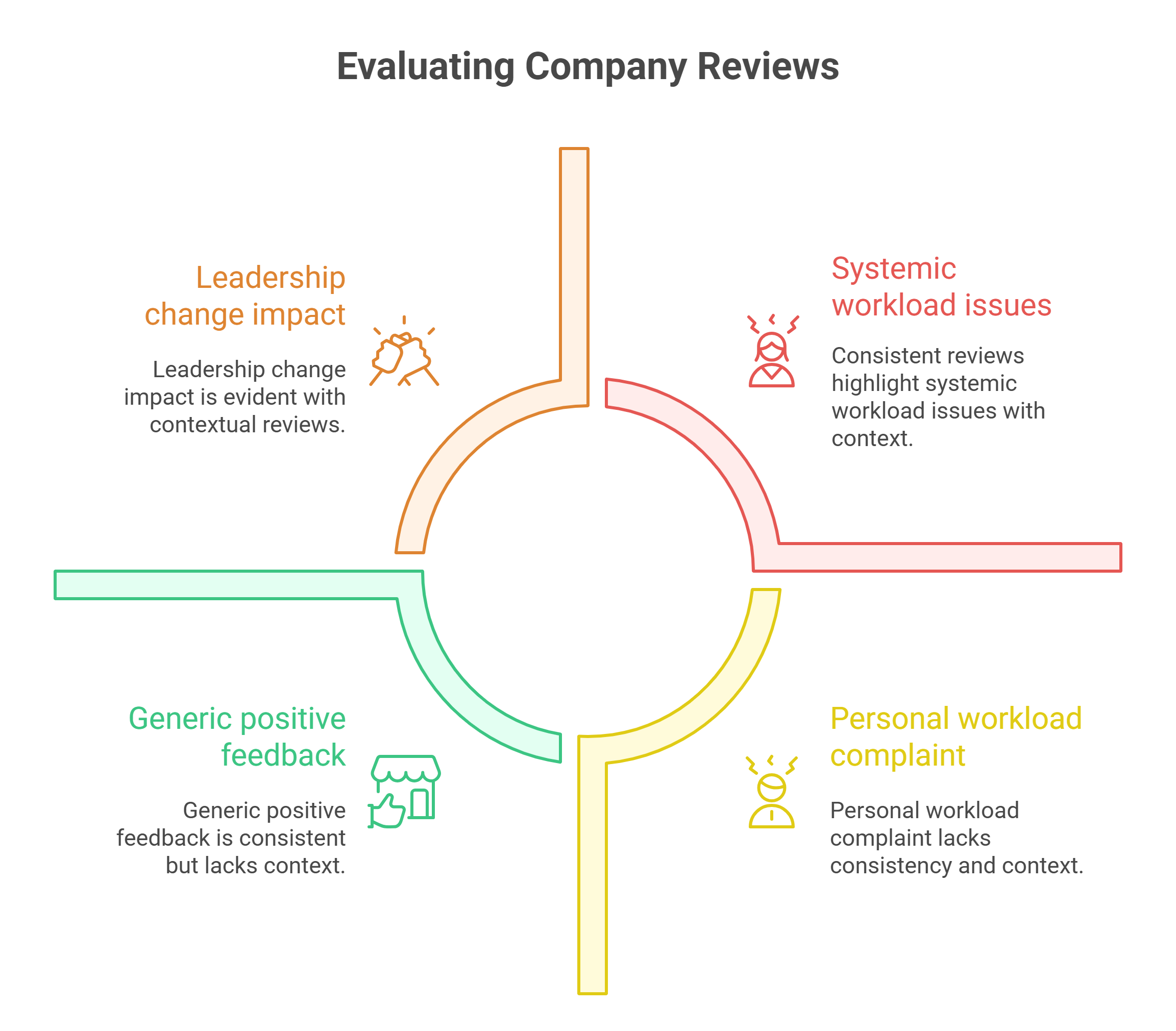
- Look for patterns, not one-off remarks
A single bad review about workload might be personal, but if 10 reviews mention long hours, it’s a systemic issue.
- Check the review dates
Older reviews may reflect past leadership. A company’s culture can change dramatically with new management, policies, or funding.
- Balance the positives and negatives
Every company has its pros and cons. Reviews that only highlight negatives without context (or only positives that sound generic) may not be reliable.
- Consider the reviewer’s position
A review from a junior employee about career stagnation may differ greatly from a senior executive’s perspective. Understanding the context helps.
- Language clues
Extremely emotional or vague reviews often indicate bias. Objective, detailed reviews tend to provide more trustworthy insights.
By developing a habit of cross-checking multiple reviews, you’ll be able to form a clearer picture of the organization.
4. Spotting Red Flags and Green Flags in Employer Feedback
Company reviews often highlight warning signs or encouraging indicators. Learning to spot them is essential before making a decision.
Red Flags:
- High employee turnover mentioned repeatedly
- Complaints about toxic leadership or favoritism
- Constant long working hours without recognition
- Lack of clarity on career growth opportunities
- Negative comments about diversity or inclusion
- Pay delays or discrepancies
Green Flags:
- Mentions of supportive leadership and mentorship
- Strong focus on employee well-being and work-life balance
- Opportunities for internal promotions and training
- Positive collaboration culture and teamwork
- Recognition of employee efforts and transparent communication
- Consistent salary hikes and fair compensation
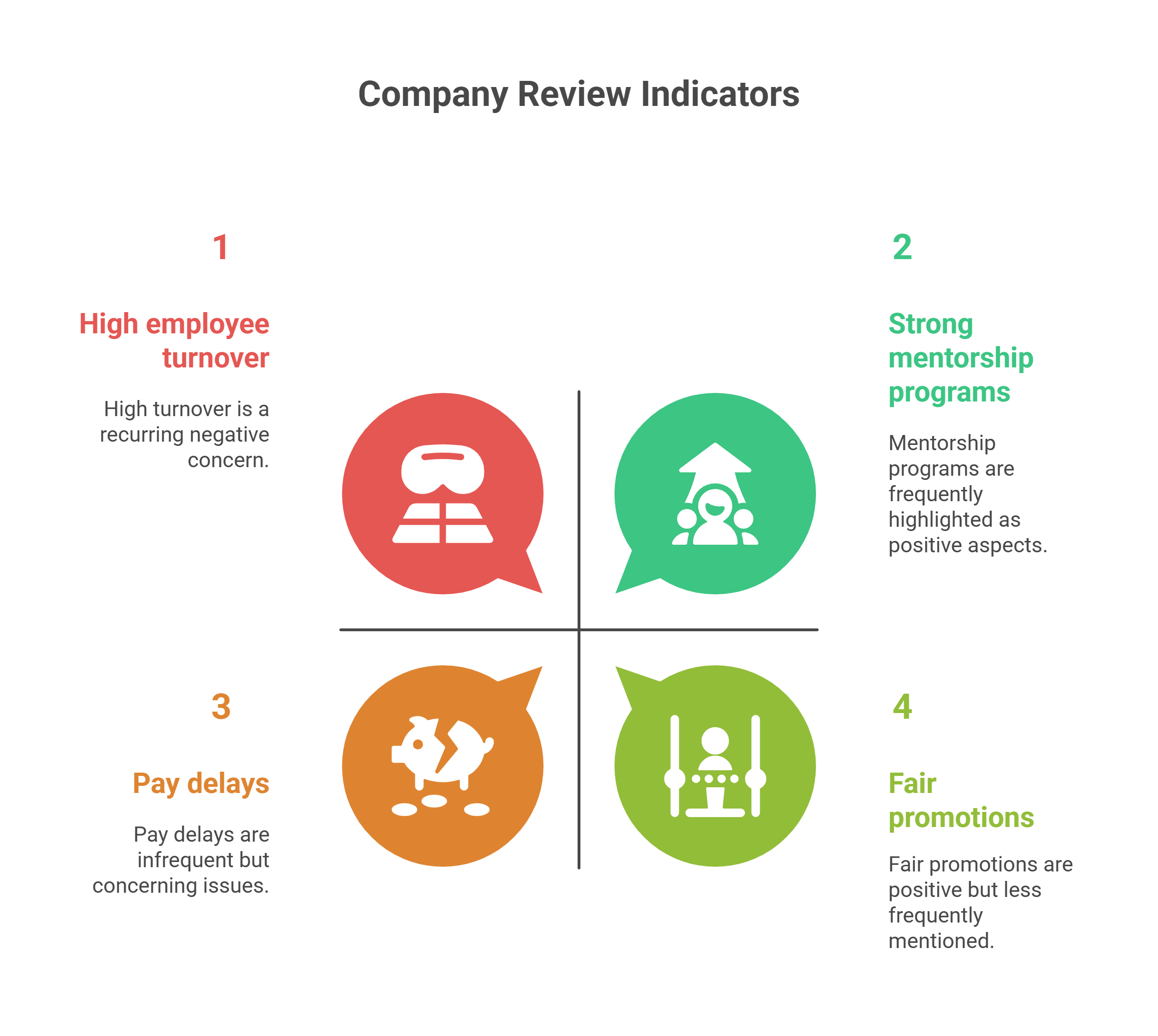
For example, if reviews consistently highlight “great mentorship programs” and “fair promotions,” you can reasonably expect professional growth. On the other hand, multiple mentions of “favoritism” or “lack of recognition” should raise caution.
When you notice a mix of red and green flags, it’s worth asking specific questions during the interview process. This way, you can directly verify the authenticity of what you’ve read.
5. Using Company Reviews to Make Smarter Career Decisions

Company reviews are just one piece of the puzzle — but they’re an important one. Here’s how to use them effectively in your decision-making:
- Compare reviews with your priorities
If flexibility is your top priority, focus on reviews discussing work-life balance, hybrid policies, and leave policies.
- Cross-verify with multiple sources
Don’t just rely on one portal. Check reviews on Glassdoor, LinkedIn discussions, Reddit forums, and niche job platforms for a balanced perspective.
- Ask interview questions based on reviews
If reviews raise concerns about leadership transparency, bring it up diplomatically during the interview: “How does your company ensure open communication between employees and management?”
- Network with ex-employees
Reach out via LinkedIn to past employees for first-hand insights. This often provides a more authentic perspective.
- Factor in your career stage
A company with fast-paced, high-pressure culture may be a great fit for someone starting their career but unsuitable for a professional seeking stability.
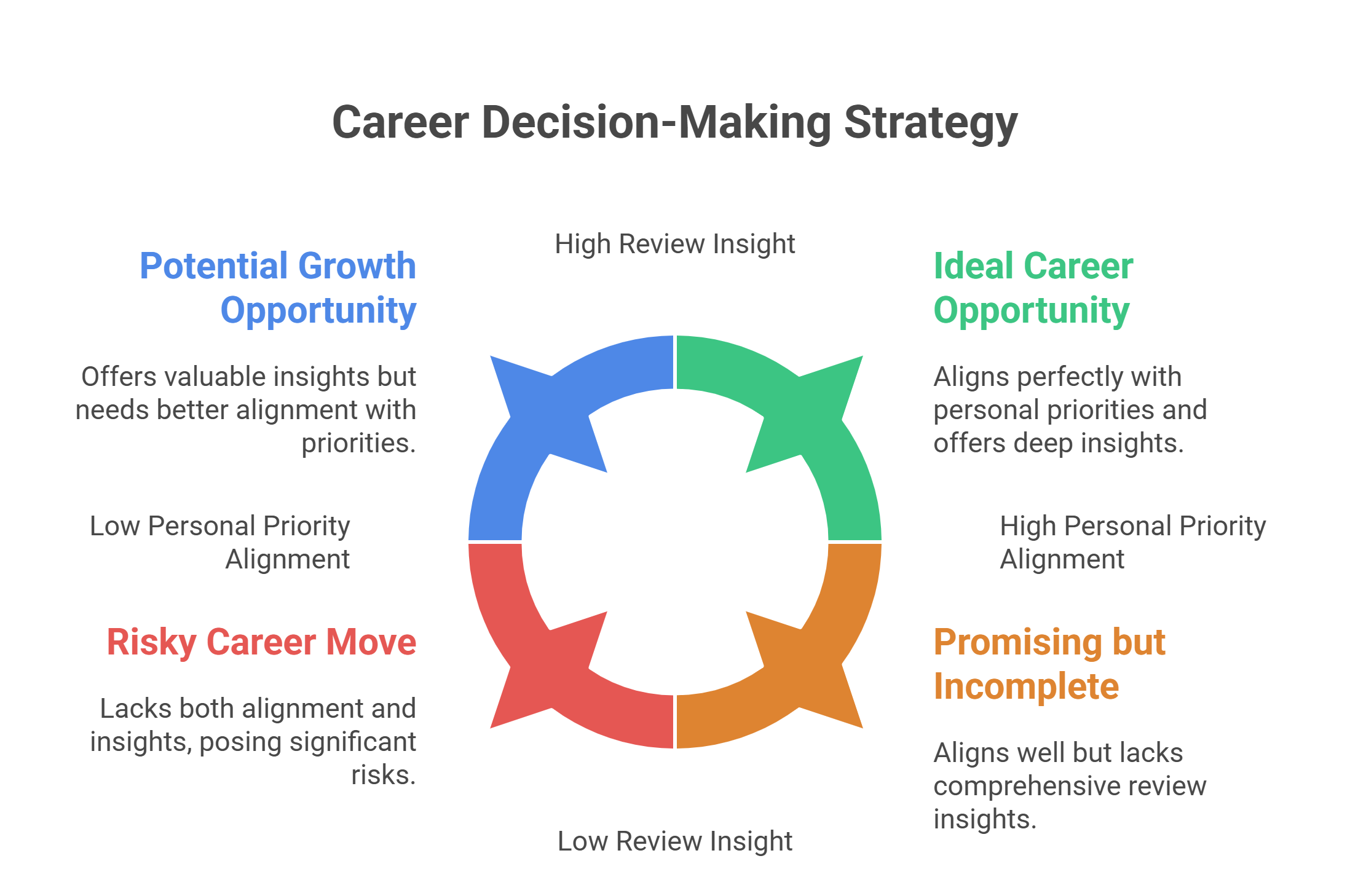
By combining insights from reviews with your personal priorities, you can make confident career choices and avoid regrets after joining.
6. Conclusion

In today’s competitive and transparent job market, company reviews serve as powerful tools to decode workplace realities. They give job seekers a chance to look beyond shiny recruitment campaigns and dive into the lived experiences of employees.
However, reviews should not be taken blindly. The real art lies in reading between the lines — identifying consistent themes, spotting red and green flags, and evaluating whether the culture aligns with your career goals. By applying a balanced and thoughtful approach, you can avoid toxic workplaces, join companies that match your aspirations, and ultimately shape a career path that is both rewarding and sustainable.
Your next job offer may look attractive on paper, but only by decoding reviews can you truly decide if it’s the right step forward.
FAQs
- Are company reviews always reliable?
Not always. Some reviews are biased or based on isolated incidents. Always look for patterns and cross-verify with multiple sources.
- Where should I check company reviews?
Popular platforms include Glassdoor, AmbitionBox, Indeed, and LinkedIn groups. Forums like Reddit can also provide authentic discussions.
- Should I reject an offer if reviews are mostly negative?
Not immediately. Evaluate whether the issues raised affect your priorities. Some concerns may be less relevant to your situation.
- What if a company has very few reviews?
This may happen with startups or smaller firms. In such cases, rely more on direct networking with employees and asking pointed questions in interviews.
Can companies manipulate reviews?
Yes, some companies encourage only positive reviews. This is why balanced, detailed, and authentic-sounding reviews are more trustworthy.


New Things Will Always
Update Regularly